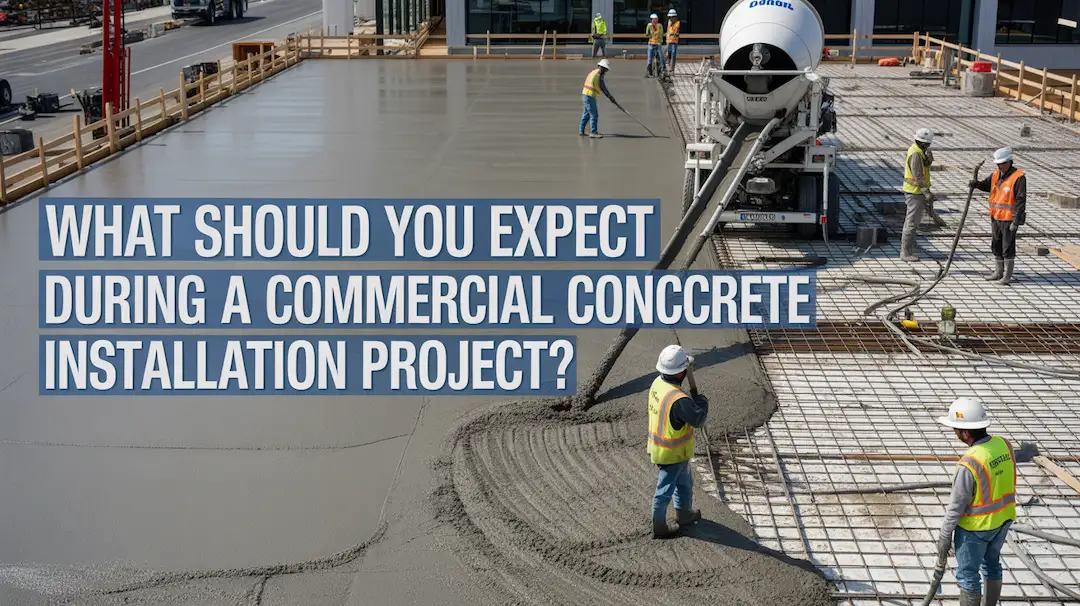
Commercial concrete projects are major investments for any business, whether you are developing a new parking area, constructing a warehouse floor, or upgrading a commercial walkway. Understanding what to expect during a commercial concrete installation project helps you prepare better, reduce delays, and achieve long-lasting results. If you’ve never been through the process before, this guide will walk you through each stage so you can approach your project with confidence.
Content
1. Initial Consultation and Site Evaluation
Every successful commercial concrete project starts with a thorough site inspection. A professional concrete contractor will visit your commercial property to assess the area, check the soil condition, measure the space, and understand the project requirements. This step ensures accurate planning and prevents structural issues later.
During the consultation, you should expect to discuss:
- The purpose of the concrete structure (parking lot, foundation, walkway, etc.)
- The expected load and foot traffic
- Drainage considerations
- Local building codes
- Project timeline and budget
Companies like BSR Renovations emphasize detailed upfront evaluation because it minimizes surprises and leads to better long-term durability.
2. Planning, Design, and Material Selection
Once the site evaluation is complete, the contractor will create a plan outlining the layout, thickness of the slab, reinforcement needs, and type of finish. Commercial concrete projects often require reinforcement such as rebar, wire mesh, or fiber additives to withstand heavy loads.
At this stage, you’ll also choose the type of finish you want:
- Smooth or broom-finished surfaces
- Decorative or colored concrete
- Stamped textures for entrances or walkways
- Polished concrete for commercial interiors
The planning phase ensures your concrete installation meets both aesthetic and functional needs.
3. Site Preparation and Groundwork
Before pouring concrete, the site must be prepared correctly. This includes clearing debris, removing old materials, grading the ground, leveling the surface, and installing forms that shape the concrete. Proper groundwork is essential because it determines the stability and strength of the commercial concrete slab.
Commercial projects may also include installing a base layer of compacted gravel to support the structure and prevent cracking. You should expect noise, machinery movement, and construction equipment on the site during this phase.
4. Pouring and Leveling the Concrete
This is the most crucial part of the commercial concrete installation process. Skilled contractors use industry-standard equipment to pour the concrete evenly, ensuring smooth distribution and eliminating air pockets. Depending on the size of the project, multiple trucks or pumps may be required.
Once the concrete is poured, workers will level and finish the surface. Techniques vary depending on the desired outcome—industrial floors may require machine-powered trowels for a flawless finish, while outdoor walkways may receive a broom texture for slip resistance.
Experienced teams such as those at BSR Renovations make sure that the concrete is placed correctly, finished professionally, and allowed to set without disturbance.
5. Curing and Strength Development
Curing is a vital step that many property owners overlook. Concrete needs time to harden and gain full strength. The curing process typically lasts several days to weeks depending on the temperature, humidity, and type of mix used.
During curing:
- Surfaces may be covered to prevent moisture loss
- Traffic must be avoided to prevent damage
- Contractors may apply curing compounds for additional protection
Skipping proper curing can lead to cracks, surface imperfections, and reduced lifespan.
6. Final Inspection and Cleanup
Once the concrete has cured, the contractor will inspect the project to ensure everything meets the required standards. This includes checking thickness, finish quality, and structural integrity.
A professional concrete contractor will also clean the site, remove temporary forms, and provide maintenance guidelines to help protect your investment.
Conclusion
A commercial concrete installation project involves many detailed steps—from evaluation and planning to pouring and curing. By understanding the process, you can set realistic expectations and ensure your project is handled by trained experts. Choosing an experienced contractor, such as BSR Renovations, guarantees quality workmanship, strong materials, and long-lasting results for your business property.

I am Donovan and my love is writing about home improvement. I write mostly about home ideas, but also share some tips and tricks that can make your life easier when it comes to getting things done in the house.